Showing posts with label stones. Show all posts

Friday, April 6, 2012

Rolling Stones: conclusion


When I began the study of stones I had hoped to develop a comprehensive and all-inclusive idea of what all God intended with His literal and symbolic use of stones. This was perhaps a little too ambitious for my limited theological abilities. There are rock/stone verses that refer to so many different things.  


In Matthew 16:18 Jesus uses the word “rock” to talk about the church. Disagreement abounds over the meaning of “on this rock I will build my church”. Some think Jesus was referring to Peter. Some think (myself included) He was referring to faith in Christ, specifically in this instance Peter’s faith. Peter had just acknowledged for the first time that Jesus was Messiah, Christ, the son of the living God. Others think that the church is built on the foundation of the apostles and prophets (Ephesians 2:20, Rev. 21:14).  And some believe the rock refers to Christ’s teachings.

And as discussed in previous posts stones were used in very literal ways. These included stones used as memory markers, for stoning people, to build the temple, as landmarks, to build houses, to write the law upon, to build city walls, for weighing things. And finally tombs were cut out of stones and tombs were closed by them.

After Jesus was crucified Joseph of Arimathea took Jesus body, wrapped it in linen and (verse 6, Matthew 27) “placed it in his own new tomb that he had cut out of the rock. He rolled a big stone in front of the entrance to the tomb and went away.”

And then the moment the stone is rolled away:

 “There was a violent earthquake, for an angel of the Lord came down from heaven and, going to the tomb, rolled back the stone and sat on it. His appearance was like lightning, and his clothes were white as snow. The guards were so afraid of him that they shook and became like dead men. The angel said to the women, “Do not be afraid, for I know that you are looking for Jesus, who was crucified. He is not here; he has risen, just as he said”. (Matthew 28: 2-6)

I do not know why God uses stones (literal and symbolic) in so many varied ways. His ways are higher than my ways and His thoughts are higher than my thoughts. I do know that for me, the stones make the story real. I can picture the rock lying near Jacob’s head while he dreamed of the great stairway. Otherwise it is just a description of a dream, abstract and unfamiliar. I can picture the rocks stacked up as memory pillars beside the Jordan. I can see and almost touch the Ebenezer stone, the stone of help. If I were a builder I could describe the physics involved in the foundation of the building and perhaps I would have set a cornerstone with my own hands.

Nothing in the description of the empty tomb mirrors anything in my own experience, I have never been in an earthquake, I have never seen an angel. I have seen stones, large and small. I have climbed on stones that were so large and heavy that I could not move them. My mother was an amateur rock collector. She picked up rocks everywhere we went, most were ordinary, some were small, others quite large. She had no knowledge of geology and had no idea what she was picking up but she knew she liked them. I like them too.

Maybe God gives us the stones in His Word to give us something tangible (and understandable) to hold onto in the midst of the miraculous and unimaginable.

Because I am so familiar with rocks and stones, I can picture myself at the tomb of Jesus. I can imagine if the stone was still in front of the tomb that I might walk up and put my hands on the rock and place the side of my face against the cool surface of the stone thinking that inside lay my Savior, the one who died for me.
The good news is that if I could go back to that tomb I would not lay my face against the stone, it was rolled away! My Savior was not and is not inside.  He rose from the grave and He lives. Composer Frances Crosby says it this way:

Christ is risen! Hallelujah! 
Gladness fills the world today;
From the tomb that could not hold Him,
See, the stone is rolled away!

Christ hath risen! Hallelujah!
Friends of Jesus, dry your tears;
Through the veil of gloom and darkness,
Lo, the Son of God appears!

Christ hath risen! Hallelujah!
He hath risen, as he said;
He is now the king of glory,
And our great exalted Head. 

May I go forth and be a Rolling Stone, a stone that is rolled away from my sinful inclinations to reveal the strength and majesty of Jesus Christ!

Thursday, April 5, 2012

Let’s Get Stoned: Penultimate Post

 I’m sorry I could not resist the title above. This topical study on stones in the Bible is wrapping up at an appropriate time, the Thursday and Friday before Easter. I have moved from stones as memory markers to stones of help and will finish tomorrow with the stone that was rolled away when Jesus rose from the grave. 


I began with study of literal stones and now am exploring what the NIV Naves’s Topical Bible calls the figurative and symbolic use of stones. In 1 Corinthians 10: 4 Paul says, “they all ate the same spiritual food and drank the same spiritual drink; for they drank from the spiritual rock that accompanied them, and that rock was Christ.”

The New Bible Commentary and the notes in my NIV Study Bible explain what Paul is speaking about. The manna given to the Israelites and the water from the rock  were provisions directly from God while they wandered in the wilderness. Moses continually wrestled with the Israelites trying to convince them that God would take care of them. Paul is saying that what they were given was more than food and water, it was spiritual food and drink from the spiritual rock, Jesus Christ, and that He accompanied them on their journey.

The commentary emphasizes that Jesus was there from the beginning (Jn. 1:2-4), He upholds all things (Col 1:17) and He was involved with God’s people in the Old Testament times as he is with God’s people (Christians) today. In Revelation chapter 2 verse 17 it says: “to him who overcomes I will give some of the hidden manna. I will  also give him a white stone with a new name written on it, known only to him who receives it.”

Here are some other wonderful verses about Jesus and stones:

1 Co. 3:11 For no one can lay any foundation other than the one already laid, which is Jesus Christ.

Isaiah 28:16 “See, I lay a stone in Zion, a tested stone, a precious cornerstone for a sure foundation; the one who trusts will never be dismayed.”

Psalm 118:22 "The stone the builders rejected has become the capstone."

Matthew 21:42 Jesus said to them, “Have you never read in the Scriptures: The stone the builders rejected has become the capstone; the Lord has done this, and it is marvelous in our eyes.” 


As I read these verses I wonder why the cross is the dominant symbol worn by Christians as jewelry or adornment. Stones were used in the Old Testament as memory pillars and landmarks, the Israelites drank from the spiritual rock that accompanied them, the one who overcomes will be given a stone with a new name, Jesus is our cornerstone! It seems it would be appropriate to wear a small rock or smooth stone or perhaps keep one in our pocket as a reminder of who Christ is and that He accompanies us everywhere. Jesus is the spiritual rock, the source of our manna and our water, our life and breath, our joy and our salvation!

Look for the conclusion of my thoughts on my topical study of stones tomorrow!

Wednesday, March 21, 2012

Raising Up My Ebenezer

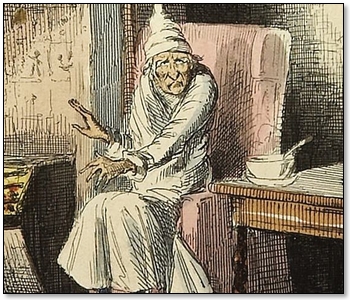
Scrooge in Scripture?


 As I continue my topical study of stones in the Bible I was delighted to come across a reference I remember from the past: A stone set up by Samuel called "Ebenezer". I have no trouble remembering this reference because I always think of Ebenezer Scrooge but I can never remember what Ebenezer means. What happens in my brain that such an outstanding Dickensian image can be retained as well as the entire plot line for A Christmas Carol, yet no matter home many times I look this up...I cannot remember what Ebenezer means. I can also remember obscure song lyrics but have no idea where I left my glasses. 


Once and for all (I’m being optimistic), here is the explanation. As we have discussed, stones in the Bible can represent Memory Pillars. They can be set up to remember a vow we have made as in the case of Jacob or in the Ebenezer example, set up to commemorate the occasion of God’s provision of victory in battle.
 
Twenty years have passed since the ark of the covenant had been taken to Kiriath-jearim (1 Samuel 7:2). Apparently some of the Israelites had begun to worship other gods.  Samuel told the Israelites to dedicate themselves to the Lord and worship only the Lord. He promised that if they did this then God would rescue the Israelites from the dreaded Philistines. The Israelites removed the Baals and other things and only worhsipped the Lord.
 
While the Israelites were meeting in Mizpah the Philistines marched toward them to overtake them. The Israelites asked Samuel to continue and to not stop crying out to God on their behalf. Samuel offered a burnt offering to the Lord for them.
 
Verse 10 says (and I love this part) “The Lord thundered loudly against the Philistines that day and threw them into such confusion that they fled before Israel.” I have a list of people I would like the Lord to thunder loudly against! I should be careful, I might be on someone’s list as well. The men of Israel pursued the Philistines and struck them down.

“Samuel took a stone and set it upright between Mizpah and Shem. He named it Ebenezer explaining, “The Lord has helped us to this point”. (1 Samuel 7;12).
 
So here is the part where I look up the meaning of Ebenezer once again, (this information was gathered here.

The word "Ebenezer" comes from Hebrew and is actually two words pronounced together: Even Haazer. Written in Hebrew it looks like this:


It is usually transliterated as a proper name by dropping the definite article (Ha) from the Hebrew word for "help" (Ezer) and putting it together with the Hebrew word for "stone" (Even) to create: "Ebenezer." The etymological roots of the word, thus defined, should demonstrate that an "Ebenezer" is, literally, a "Stone of Help."...Literally speaking, an Ebenezer is a "stone of help," or a reminder of God’s Real, Holy Presence and Divine aid.

Hebrew word for “help” is Ezer.  Hebrew word for “stone” is Even. Stone of Help. Unfortunately, Hebrew and Greek are so unfamiliar to me that I cannot form word associations for them. If it were Latin then I might be able to picture the word or relate it to my very limited Spanish vocabulary. ‘Help’ doesn’t look like EZER. ‘Stone’ doesn’t look like EVEN or EBEN. 
 
I am trying those memory tricks (as I type this) where you make up a picture in your mind with all the words you are supposed to remember on a table with objects that remind you of the words. Hmm. Samuel (who is dressed as Scrooge), let’s call him Ebenezer Samuel, is standing behind a table. There are dead Philistines lying on the ground behind him (you can tell they are Philistines because they have the letter “P” on their tunics). Ebenezer Samuel places a big rock on the table, written on the big rock is EVEN (this doesn’t really help because the word is Ebenezer not Evenezer). Next, God thunders (because I like that part of the story)- that can be a lightening bolt in our picture. Across the lightening bolt is written EZER in bright red superman letters. It could be that I’m not very good at this word picture memory thing. 

 It could be that when I next sing, “Come thou fount of every blessing” and come to the second verse, "Here I raise mine Ebenezer; hither by thy help I’m come..." that I will continue to have no idea what I’m singing and will yet again have to look it up. The author of the helpful information quoted previously, Dr. Gregory S. Neal, commented in his article that every time he sings that hymn he “cannot shake the mental image of someone holding up Ebenezer Scrooge.” 
 
Regardless of the unintended whimsy of this reference, it brings up a good point. An Ebenezer stone was the stone set up by Samuel to remember and honor the help God had given the Israelites. The Word of God is my Ebenezer. I am so fortunate to have God’s word, written in so many easily understood translations to remind me that God has helped me in the best way possible. He has provided eternal salvation for me through the sacrifice of His Son, Jesus Christ. Dr. Neal said in his article:

an Ebenezer can be nearly anything that reminds us of God’s presence and help: the Bible, the Sacramental Elements, a cross, a picture, a fellow believer, a hymn – those things which serve as reminders of God’s love, God’s Real Presence, and God’s assistance are "Ebenezers."

In a general sense that may be true but it seems that God deliberately gave us The Word, His Son, The Cornerstone to be our everlasting Ebenezer, the rock who helps. I am probably getting ahead of myself by including the cornerstone before actually reading all the verses on stones. However, these are the verses I was thinking of, verses about Jesus as the Word and a precious cornerstone:

The Word became flesh and made his dwelling among us. We have seen his glory, the glory of the One and Only, who came from the Father, full of grace and truth. John 1:14

In the beginning was the Word, and Word was with God, and the Word was God. He was with god in the beginning. Through him all things were made; without him nothing was made that has been made. In him was life and that life was the light of men. The light shines in the darkness, but the darkness has not understood it. John 1: 1-5

Therefore the Lord said: “Look, I have laid a stone in Zion, a tested stone, a precious cornerstone, a sure foundation; the one who believes will be unshakable. Isaiah 28:16
 
Sometimes in our rush to application I think we can get too general, maybe sometimes God is more specific than we think. Maybe anything CAN be an Ebenezer, maybe not. Either way it is safe to say that Jesus is our rock, our salvation, a tested cornerstone and He is our Ebenezer, our stone of help.


Tuesday, March 20, 2012

No Stone Unturned (almost)

Picture taken in Carmel, CA July 2011, these are not stones I would want to touch much less turn over! Birds are fascinating, bird poop, not so much.


In the first installment of my topical study of stones in the Bible I optimistically and perhaps in a cavalier manner stated that I would leave "no stone unturned" implying that I would look up every reference to stones in the Bible. Well...I may actually leave at least a few categories of stones unturned.

In Rick Warren's Bible Study Methods, Twelve Ways You Can Unlock God's Word, Warren says, "Be thorough. As far as possible, find and study every verse that relates to the topic. The only way to know everything God has said on a topic is to go through the entire Bible and find all the passages on that topic." Hmm. According to Zondervan NIV, Nave's Topical Bible there are about 58 separate references (more verses) on the literal use of stones. There are about 21 verses on the figurative and symbolic use of stones.

There are additional references for precious stones and also many, many references for stones used for stoning people. For this reason, and I hope Rick Warren won't mind, I will limit my study to the literal, figurative and symbolic stones and will omit the precious stones and stones used for stoning people. My study will include stones used for building, stones used for remembering events, stones that can cause someone to stumble and stones that in some way describe Christ or the Spirit.

This week I was particularly "struck" (no pun intended) by the stones that are used to mark occasions that are to be remembered, the topical Bible calls them Memory Pillars. In Genesis 28:18-22 Jacob took the stone that had been near his head while he slept and dreamed and set it up as a marker. He poured oil on top of it and named the place Bethel. Jacob then made a vow that if God would protect him on this journey and would bring him back safely then the Lord would be Jacob's God. God has just given Jacob a dream of the stairway with angels walking up and down from earth to heaven. God has  promised in the dream to give Jacob the land he has been sleeping on. Initially the vow sounded to me like second guessing God and also, are we allowed to make these kinds of deals with God? The New Bible Commentary* says that "as long as the votary
 performs his vow, the Old Testament does not discourage them...Vows are not necessarily bargaining with God, rather they can express our dependence on him. Nor was Jacob's vow here an expression of unbelief in the promises just made to him, for all petitionary prayer is based on God's promises to provide for our needs (Mt. 6:11 with 6:25-34)".  I really like it when the commentary actually answers the questions that I have!!

Many of my prayers lately have been based on God's promises to provide. Jesus told us to pray: "Give us this day our daily bread..." I am so tempted to pray for tomorrow's bread and next month's bread. And I want to see tangible results. Jacob wanted more than just his extraordinary dream. He wanted something in the waking world to signify God's promise and provision. He took the rock that had been beside his head during that remarkable dream and he poured oil over it. I tried to think of how I could pour oil over my requests before God. I've been in a church service where we wrote our prayer requests on a piece of paper and then walked up to the altar and put them up on a wall. I've heard of people writing sins on a piece of paper and then burning the paper to symbolize the confession and turning from the sin. We as people seem to need something we can touch, see, read or hold, something tangible. My desire is that God's Word, His promises would become as real to me as the stone by Jacob's head was to him, that Jesus and His saving grace would be such a big stone of faith that nothing could move it. I hope that by meditating on God's Word and His promises it will be as if I were pouring oil over my little stone of faith. May my stone of faith grow larger every day and be so real that I can reach out and touch it.


***************************************************************

*I will take a moment to express my thoughts on commentaries. I like them! For those of us without formal theological training and with limited time they can be a great tool. I do not think commentaries can be substituted for scripture, nor do they carry the weight of scripture, nor are they definitive. They are a tool. Sometimes when I read scriptures that confuse me I will ask God to help me understand the difficult passage in the way He intended it. I will ask for wisdom. Sometimes I will get a new insight or suddenly see the passage in a new way but sometimes I simply do not have the knowledge (culture of the time, Greek language, Hebrew language) to get the true picture. At those times I benefit from the writings and knowledge of others; always remembering that the words of others (even brilliant scholars) are not scripture. One of the questions I always ask when reading what someone else has written about the Bible is: "Does this make sense with regard to other things that the Bible says?, Is it consistent with what I already know about God and His character from the Bible?".

Monday, March 12, 2012

One Thing Leads to Another - again and again!

stones from our flower bed, this is better than the smoothie picture!
Today, two different projects came together to lead me to a third and really my 6 mile run sealed the deal! I am about 6 days behind in my goal to Read The Bible in a Year. I've mentioned before I am reading chronologically through the bible on You Version. Currently I am in Joshua. I am also in the middle of my project of making crosses. My goal is to make a cross every day leading up to Easter. Today was day 20 of making crosses!

While I was reading in Joshua today I noticed that "Stones" came up quite often in these few chapters and for different reasons. First, the stones were used as memorial markers to remember that the Lord had dried up the waters of the Jordan so that the Israelites crossed on dry ground.

Joshua 4:20-24

Holman Christian Standard Bible (HCSB)
20 Then Joshua set up in Gilgal the 12 stones they had taken from the Jordan, 21 and he said to the Israelites, “In the future, when your children ask their fathers, ‘What is the meaning of these stones?’ 22 you should tell your children, ‘Israel crossed the Jordan on dry ground.’ 23 For the LORD your God dried up the waters of the Jordan before you until you had crossed over, just as the LORD your God did to the Red Sea, which He dried up before us until we had crossed over. 24 This is so that all the people of the earth may know that the LORD’s hand is mighty, and so that you may always fear the LORD your God.”

Next I read about Achan. Achan kept for himself some treasures that he coveted from the spoils that had been taken at the fall of Jericho. He buried these things in the ground in his tent. Joshua confronted Achan who admitted his crimes. Achan was stoned to death and they raised a pile of rocks over his burned body.

 25 Joshua said, “Why have you troubled us? Today the LORD will trouble you!” So all Israel stoned them[a] to death. They burned their bodies,[b] threw stones on them, 26 and raised over him a large pile of rocks that remains to this day. Then the LORD turned from His burning anger. Therefore that place is called the Valley of Achor[c] to this day.

And it was when I next read of an altar being built of uncut stones that I began to wonder about the pattern.  

 
30 At that time Joshua built an altar on Mount Ebal to the LORD, the God of Israel, 31 just as Moses the LORD’s servant had commanded the Israelites. He built it according to what is written in the book of the law of Moses: an altar of uncut stones on which no iron tool has been used. Then they offered burnt offerings to the LORD and sacrificed fellowship offerings on it. 32 There on the stones, Joshua copied the law of Moses, which he had written in the presence of the Israelites

I began to wonder about the corner stone and all the references to the Lord as our rock. This has been in the back of my mind since my friend Denise brought it up with regard to one of my earlier crosses.

This led me to make a cross today that involved stones. The cross did not turn out as I had seen it in my mind's eye. After making the cross I decided to run 6 miles. I often think and pray while running or sometimes I just zone out. About half-way through the run I thought I should do a word study on stones. God is the ultimate creator. He creates in ways we do not understand and hidden in His word are images that mean more than we know unless we take the time to follow them throughout scripture. So reading the bible in a year led to making a cross which led to doing a word study on stones.  One thing leads to another.

So far I have looked up verses about the ten commandments written on stones. The standout here is when the Bible says that they were "stone tablets inscribed by the finger of God".  The tablets were broken by Moses and God gave them to him again.

Joshua later renewed the covenant and he copied the laws of Moses on an altar of uncut stones. I have read about houses (in the Bible) made of stone and I finished today by beginning the verses about the stones used to build the Temple. I am not halfway through the verses for the literal stones- once I look up those I will begin the verses that talk about figurative stones. I am excited to get the big picture.  I will leave no stone unturned! ha ha.